
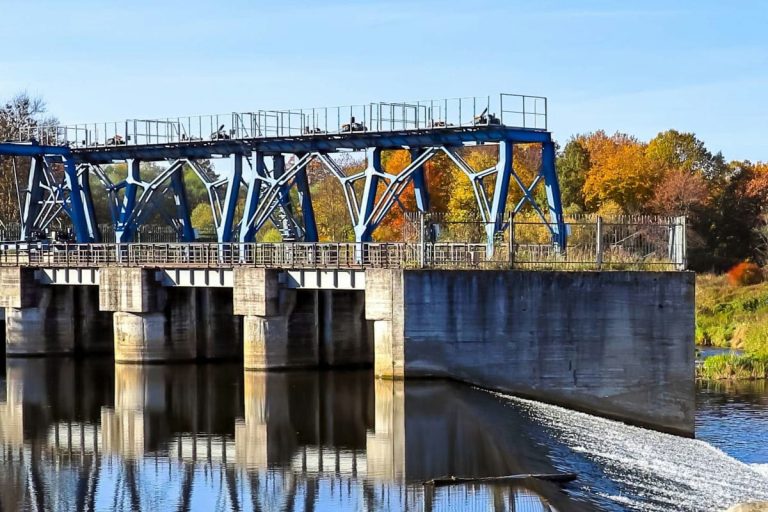
Small hydropower plants, commonly referred to as ‘mini-hydro’ or ‘micro-hydro’, refer to plants that generate electricity from the force of water, with a capacity generally less than 10 MW. Unlike large hydropower dams, these installations do not require vast water reserves or heavy infrastructure. They can be classified into three main categories: Pico-hydro (up to 10 kW), micro-hydro (10 kW to 100 kW), and mini-hydro (100 kW to 10 MW). The design of small hydropower plants mainly relies on two types of technologies: run-of-the-river and reservoir-based plants. Run-of-the-river plants use the natural flow of a river, without the need for a large reservoir, significantly reducing their environmental impact. On the other hand, reservoir-based plants store water for later use, allowing for electricity generation to be regulated according to demand. In both cases, water turns turbines connected to generators that produce electricity. The installation of small hydropower plants requires a precise evaluation of water resources, topographic conditions, and local energy needs. Preliminary hydrological and environmental studies are often necessary to ensure the project’s viability while minimizing the impact on the ecosystem. Once these steps are completed, the implementation of the plant is relatively quick compared to large energy infrastructures. One of the distinctive features of small hydropower plants is their ease of integration into the local electrical grid, offering a flexible and adaptable solution to the needs of rural and isolated communities. In summary, small hydropower plants represent a mature and proven technology, suitable for a multitude of geographical and climatic contexts. They embody a promising path towards decentralized, sustainable, and small-scale energy production, thus contributing to the energy self-sufficiency of local communities.
Small hydropower plants stand out for their environmental benefits, putting them at the forefront of environmentally friendly renewable energy sources. One of the greatest contributions of mini-hydro lies in their relatively low ecological footprint. Unlike large hydropower plants, they do not require the construction of vast dams or reservoirs, thereby significantly reducing the impact on aquatic and terrestrial ecosystems. A major advantage is the very low greenhouse gas (GHG) emissions of small hydropower plants. During their production phase, they emit virtually no CO2, directly contributing to the reduction of the carbon footprint of the territories they serve. Compared to thermal power plants using fossil fuels, small-scale hydropower is undeniably cleaner, actively participating in the fight against climate change. Small hydropower plants also present an advantage in terms of water resource management. They require smaller volumes of water than those needed by large plants, and their ability to operate without large reservoirs means that the natural flow of rivers is less disrupted. Additionally, depending on their design, they can improve water quality by oxygenating the rivers and regulating water temperature – two beneficial aspects for aquatic flora and fauna. Landscape integration is also a strong point of small plants. Their modest size and capacity to be installed in various locations – including remote or hard-to-reach areas – limit visual changes to the landscape. Furthermore, these installations can often be integrated into existing infrastructures, such as water mills or small dikes, further reducing their visual and environmental impact. In conclusion, small hydropower plants offer significant environmental benefits. Their ability to provide clean energy with minimal ecosystem impact makes them an attractive option for local communities concerned about their environment and energy future.
Small hydropower plants involve a set of considerable socio-economic benefits for local communities. They contribute to economic revitalization, job creation, infrastructure improvement, and the promotion of community development. Firstly, these installations can offer a stable and affordable source of energy, essential for local economic development. In many remote and rural regions, connecting to the national electrical grid is costly and technically challenging. The introduction of mini-hydro not only reduces this dependency but also ensures continuous electricity supply, facilitating the establishment and expansion of income-generating activities. Sectors such as agriculture, industry, and services can thereby benefit from better energy accessibility, boosting the local economy. Small hydropower plants also generate job creation at different levels. The construction phase requires local labor for civil works, equipment installation, and commissioning of plants. Subsequently, their operation and maintenance require technicians and engineers, resulting in permanent jobs and a growing demand for local skills. Moreover, these projects often promote technical training and knowledge transfer, thus enhancing local capacities. The socio-economic impact also extends to local infrastructure. The establishment of small hydropower plants is often accompanied by the improvement or construction of roads, bridges, and other necessary infrastructures to access the sites. These improvements also benefit surrounding communities by facilitating transport and increasing accessibility to essential services such as health and education. The benefits are not limited to the economic aspect. Small hydropower plants also foster social cohesion and community development. Localized energy production often allows communities to organize themselves around the collective management of the installation, promoting civic participation and community engagement. Additionally, access to a reliable and renewable energy source improves the quality of life of residents by contributing to the reduction of energy poverty and increasing access to basic services. Ultimately, small hydropower plants have a profound and diversified socio-economic impact on local communities. By providing clean, stable, and affordable energy, they stimulate economic development, create jobs, foster infrastructure improvement, and strengthen social cohesion, thus contributing to the resilience and prosperity of communities.
To illustrate the effectiveness and impact of small hydropower plants, let’s look at some notable examples of successful projects around the world. A flagship case is the Sidrapong hydropower plant, located in India. Sidrapong is Asia’s oldest hydropower plant, commissioned in 1897 with an initial capacity of 2×65 kW, increased to 2×100 kW in 1931. Although modest, this plant has played a crucial role in electrifying the region, facilitating local economic development, and improving the quality of life of the inhabitants. Today, it is a historical and functional symbol, still operating with a portion of the generated power. In Africa, the Murang’a region in Kenya has benefited from the installation of the Tungu-Kabiri hydropower plant, with a capacity of 18 kW. This micro-plant was commissioned to primarily serve schools, health centers, and homes in this rural area. Before this installation, the region experienced low electrification. The arrival of this renewable energy source transformed the community, facilitating access to education by lighting schools and improving healthcare with reliable electrical supply for medical equipment. Europe does not lag behind with examples like the Devoll hydropower plant in Albania, mainly consisting of two small plants, Banja and Moglicë, with capacities of 66 MW and 177 MW respectively. Although slightly above the typical threshold for small installations, this project illustrates the adaptability and expansion potential of small hydropower systems depending on local resources. These plants have significantly contributed to the country’s energy independence and offer a sustainable revenue source through the sale of electricity. Another significant example comes from Peru, where the Colca micro-plant, with a capacity of 0.15 MW, was established in a mountainous region. Thanks to this project, local communities have seen a considerable improvement in their quality of life. The plant provides electricity to several hundred households, allowing domestic lighting, food refrigeration, and the establishment of small local businesses that depend on electricity to operate. These examples show that, regardless of size or production capacity, small hydropower plants have a significant impact on local communities by offering sustainable and suitable energy solutions. They also demonstrate the versatility and applicability of this technology in diverse contexts around the world.
Despite their numerous advantages, small hydropower plants face various challenges that can hinder their development. Identifying these obstacles is essential for formulating viable solutions and ensuring their future as a renewable energy source. One of the primary challenges is financial. The initial costs for setting up small hydropower plants, although generally lower than those of large plants, can be prohibitive for small communities. Financing these projects often requires government subsidies, public-private partnerships, or community fundraising initiatives. Access to credit and attracting private investments remain major obstacles, particularly in developing regions or rural areas. Regulatory and administrative constraints constitute another significant challenge. Authorization and regulatory processes can be lengthy and complex, involving various environmental assessments and public consultations. Bureaucratic necessities can considerably delay project implementation, increasing costs and discouraging potential investors. It is therefore crucial to simplify administrative procedures and provide a clear and favorable regulatory framework for small hydropower plants. On the technical front, small hydropower plants must overcome challenges related to efficiency and maintenance. Seasonal variations in water flow can affect electricity production, requiring innovative management solutions to ensure stable energy supply. Additionally, local skills in maintenance and technical management may be insufficient, highlighting the need for training and skills transfer initiatives. However, despite these challenges, the future prospects for small hydropower plants remain promising. Technological advances, such as the integration of energy storage systems by batteries or the use of more efficient turbines, offer solutions to improve the viability and performance of these installations. Moreover, the rising importance of environmental concerns and the global transition to renewable energy sources create a favorable environment for the development of mini-hydro. Public policies also play a crucial role. Governments can stimulate this sector through subsidies, tax incentives, and favorable regulatory frameworks. Furthermore, international cooperation and development aid programs can support local initiatives through financing, training, and technology transfer. In conclusion, although small hydropower plants face various challenges, the opportunities they offer for sustainable development and energy transition are substantial. With adequate investments, favorable policies, and technological innovations, they will continue to emerge as a viable and effective solution for local communities around the world.