
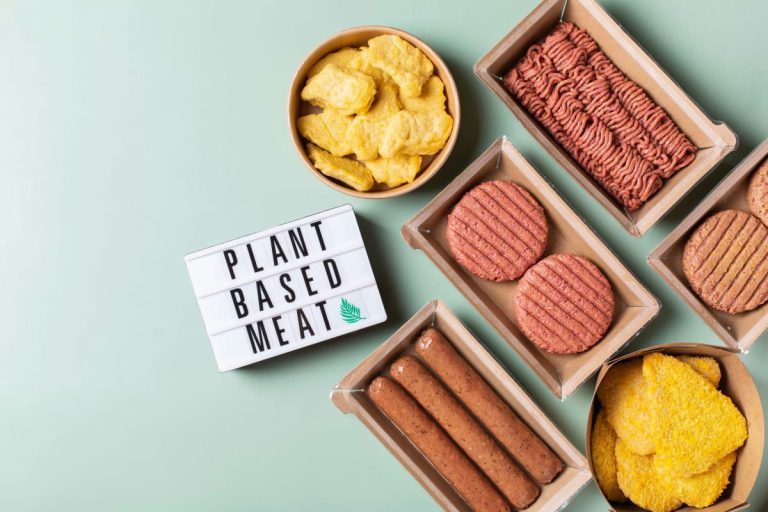
Beyond Meat has established itself as a key player in the transformation of the food industry by offering plant-based alternatives to traditional meat products. Founded in 2009, the company has captured the public’s attention with products that remarkably mimic the taste and texture of animal meat. The innovation lies in the use of proteins derived from peas, rice, and other legumes, which reproduce the characteristics of meat without any animal components. Beyond Meat’s stated goal is ambitious: to reduce the world’s dependence on meat by offering an option that does not compromise on taste or satisfaction. Over the years, the company has heavily invested in research and development to perfect its recipes and production techniques. This scientific and consumer-focused approach has allowed Beyond Meat to create a niche that attracts not only vegans and vegetarians but also flexitarians and omnivores eager to diversify their diets. By placing plant-based meat at the heart of eating habits, Beyond Meat has expanded its distribution points, ranging from supermarkets to renowned restaurants. Beyond Meat’s product innovation efforts have enabled it not only to stand out from its competitors but also to set benchmarks closely followed by many new entrants in the plant protein market. Thus, Beyond Meat’s pioneering approach seems to be redefining food industry standards while responding to growing consumer awareness.
One of the main reasons for Beyond Meat’s growing popularity is its environmental benefits. Plant-based meat production has a significantly reduced environmental impact compared to traditional farming. For example, studies show that Beyond Meat products generate up to 90% fewer greenhouse gas emissions than conventional meat products. This significant reduction is essential in a time when climate change is at the forefront of global concerns. Additionally, the production of plant-based meat consumes much fewer natural resources, notably water and agricultural land, compared to traditional farming. In numerical terms, producing a Beyond Burger requires 99% less water and 93% less land than producing a traditional beef burger. This resource conservation contributes to an overall lower environmental impact, making these products particularly attractive to eco-conscious consumers. By integrating sustainable practices into their production process, Beyond Meat is leading the way toward a cleaner and more responsible food sector. Furthermore, by offering alternatives that fit easily into modern diets, Beyond Meat embodies a feasible transition toward more sustainable consumption practices. While providing consumers with a tasty and convenient option, Beyond Meat is actively participating in a future where food is in harmony with our planet’s needs. The success of this approach will likely encourage other companies in the sector to adopt a similar production ethic, thus driving the food industry toward a more resilient and sustainable path.
Beyond Meat has pursued an active partnership strategy to democratize access to sustainable food options. These strategic alliances, notably with fast-food chains and supermarkets, have been crucial in popularizing plant-based products among the general public. By collaborating with industry giants like McDonald’s, KFC, and Subway, Beyond Meat has successfully integrated its products into the daily lives of millions of consumers. These partnerships not only serve to increase Beyond Meat product visibility but also to legitimize plant-based alternatives as a tasteful and nutritious option in contexts where consumers traditionally expect a meat experience. The impact of these collaborations is tangible: people now have access to sustainable food choices in places where quick and convenient eating prevails. In addition to restaurant partnerships, Beyond Meat has also partnered with major retailers like Walmart and Tesco, making its products available in thousands of supermarkets worldwide. This increased access facilitates the incorporation of plant-based products into daily households, making the transition to sustainable eating not only possible but straightforward. Through these efforts, Beyond Meat’s vision takes shape: creating a food environment where sustainable options are as accessible as their traditional counterparts, forging a gradual but profound change in global eating habits.