
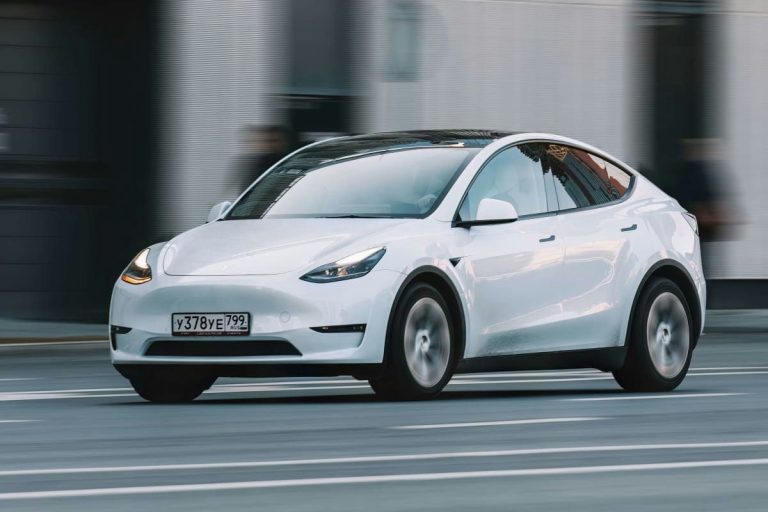
Since its foundation, Tesla has focused its efforts on transforming the automotive sector by promoting electric mobility. The company, led by Elon Musk, has established itself as a leading figure in the electric vehicle (EV) industry, whose primary mission is to reduce carbon dioxide (CO2) emissions. Tesla vehicles not only offer an eco-friendly alternative; they also redefine the driving pleasure with their advanced technology and impressive performance. By combining technical innovation and ecological vision, Tesla inspires change in a sector traditionally dominated by fossil fuel vehicles. Tesla’s choice to focus solely on EVs demonstrates its firm commitment to a sustainable energy future. By eliminating direct CO2 emissions, Tesla cars significantly contribute to reducing the carbon footprint of land transportation. Its expanding network of superchargers, enabling fast and efficient charging, aims to reassure drivers by betting on the practicality and accessibility of electric vehicles. Through its constant efforts to improve battery range and charging, Tesla is pushing the world to rethink mobility from a greener and more innovative perspective. Nevertheless, Tesla’s success in green mobility is not solely measured by its car sales. Its influence also extends to motivating other automakers to adopt electrification, thus accelerating the global transition to sustainable transportation. This leverage action on the industry as a whole is a powerful demonstration of Tesla’s ability to lead a paradigm shift towards carbon-free mobility, reshaping the automotive landscape for future generations.
Beyond the automotive sector, Tesla strives to transform homes into models of energy sustainability through its innovative solutions, the Powerwall, and solar panels. The Powerwall, a rechargeable home battery, is designed to store solar energy, making homes more independent from the traditional power grid. By storing energy produced by solar panels, it enables households to manage their consumption flexibly, thus reducing their reliance on fossil fuels. This energy independence promotes a substantial reduction in household carbon footprints while providing resilience against power outages. Tesla’s solar panels, harmoniously integrated with home design, aim to make solar energy more affordable and attractive to a larger number of consumers. These installations provide a clean and renewable energy source, which not only lowers electricity bills but also reduces the overall environmental impact. With advanced technology, the solar panels are designed to maximize solar energy production, even in suboptimal lighting conditions, ensuring consistent and reliable performance. By combining Powerwall and solar panels, Tesla implements a coupled energy strategy that offers consumers a comprehensive solution to their domestic energy needs. This holistic approach not only enhances the energy efficiency of households but also contributes to Tesla’s overarching vision of a decarbonized future. Through these innovations, Tesla encourages not only a change in how energy is consumed but also broader awareness of the economic and environmental benefits of sustainable energy.
Tesla’s commitment to green innovation is not without challenges. Sustainable battery production remains one of the main obstacles the company faces. Lithium batteries, the core of electric vehicles, require mining resources whose extraction and processing raise environmental and ethical questions. This is why Tesla invests significantly in research to develop battery technologies that are less dependent on rare materials while improving current recyclability. This quest to design more environmentally friendly batteries is one of the cornerstone of its future strategies. In parallel, logistical challenges related to the rapid expansion of charging infrastructure, both for vehicles and home installations, pose sustainability questions. Nevertheless, each challenge comes with opportunities. The untapped potential in supply chain optimization and industrial process efficiency paves the way for significant advances. In this context, Tesla’s pioneering and proactive approach continues to position it at the forefront, galvanizing innovation throughout the energy sector. Despite these obstacles, Tesla remains an undisputed leader in green innovation. Its achievements, including the revolution of electric vehicles and home energy solutions, demonstrate its role as a catalyst for a global transition to sustainability. By its determination to overcome challenges and seize future opportunities, Tesla adopts an approach that inspires and motivates a global shift towards a cleaner world. As it progresses on this path, Tesla not only defines its future but also shapes the future of our planet.