
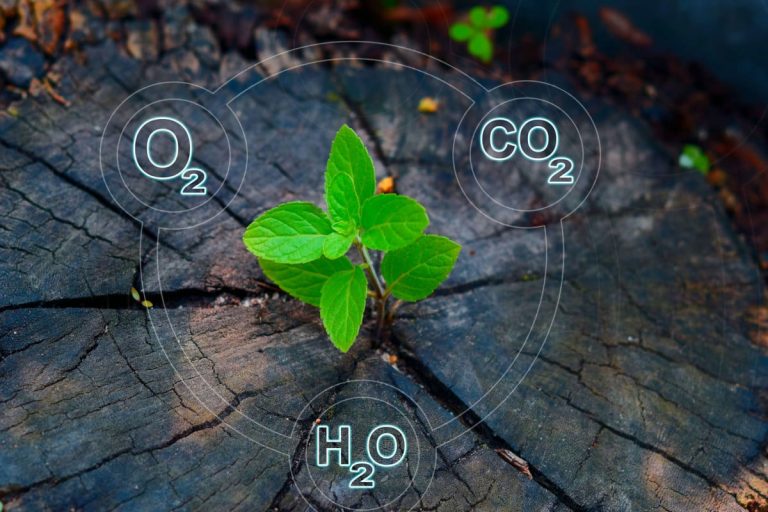
The natural carbon cycle is a fundamental process for maintaining ecological balance on Earth. To fully understand this phenomenon, it is essential to grasp that carbon is an omnipresent chemical element in our environment. It is found in the atmosphere as carbon dioxide (CO₂), in living organisms, and even dissolved in the oceans. The carbon cycle describes how this vital element circulates through the different reservoirs of the planet, including the lithosphere, hydrosphere, biosphere, and atmosphere. At the heart of the carbon cycle are two essential processes: photosynthesis and respiration. Plants, through photosynthesis, convert carbon dioxide and water into glucose and oxygen using solar energy. This glucose is then consumed by animals and humans, releasing carbon dioxide during respiration. This CO₂ then returns to the atmosphere, thus closing a part of the cycle. But the carbon cycle is not limited to the simple interaction between plants and animals. It also includes broader and more complex exchanges such as the dissolution of CO₂ in the oceans, the formation of carbonate rocks, and the decomposition of organic matter. These processes play a crucial role in maintaining climatic and ecological balances, influencing the concentration of carbon in the atmosphere and thus global warming. The natural carbon cycle is therefore a key driver of many biological and geochemical processes. Yet, its complexity often exceeds understanding, intertwined with multiple interactions and feedbacks that require deep comprehension to assess the impact of anthropogenic, or human-originated, disturbances. By discovering the intricacies of these mechanisms, we acquire the knowledge necessary to better grasp current and future environmental challenges.
To fully understand the carbon cycle, it is imperative to identify the main reservoirs where this precious element is found. They are generally classified into four major categories: the atmosphere, hydrosphere, biosphere, and lithosphere. The atmosphere is the most visible place where carbon is presented in the form of carbon dioxide (CO₂) and, to a lesser extent, methane (CH₄). These gases trap heat and contribute to the greenhouse effect, making the understanding of this reservoir particularly important in the context of climate change. About 760 gigatonnes of carbon are currently present in the atmosphere, a fraction compared to other reservoirs. The hydrosphere, including the oceans, lakes, and rivers, contains massive amounts of carbon. About 38,000 gigatonnes of carbon are found dissolved mainly in the oceans as bicarbonate and carbonate. The oceans act as a large buffer, absorbing and releasing CO₂ depending on temperatures, currents, and other environmental factors. This reservoir therefore plays a crucial role in regulating the global climate. The biosphere, including all living organisms, is also a significant reservoir. Plants, animals, fungi, and microorganisms store about 560 gigatonnes of carbon. The photosynthesis of plants and the digestion of animals are central processes, transforming atmospheric carbon into organic matter and vice versa. Finally, the lithosphere, which includes rocks and soils, represents the largest carbon reservoir, with about 100,000,000 gigatonnes of carbon. Much of this carbon is stored in carbonate rocks such as limestone and marble, but it is also found in fossil fuels such as coal, oil, and natural gas. The interaction between these reservoirs through various processes creates a complex and balanced dynamic that, if disrupted, can have global consequences. Carbon reservoirs are therefore not independent entities but work together to maintain the ecological and climatic balance of our planet.
The circulation of carbon between its different reservoirs is governed by a series of essential processes such as photosynthesis, respiration, decomposition, dissolution in the oceans, and sedimentation. Understanding these mechanisms allows us to grasp how carbon travels and transforms in the environment. Photosynthesis is the process by which plants, algae, and some bacteria convert carbon dioxide and water into glucose and oxygen using solar energy. This process is the basis of primary production, fueling most of the terrestrial food chain. Atmospheric carbon is thus fixed in the biomass of plants. Respiration, on the other hand, is the reverse process of photosynthesis. All living organisms, including plants, animals, and microorganisms, perform it to produce the energy needed for their vital functions. During respiration, glucose is broken down, and carbon dioxide is released into the atmosphere. Respirations thus help recycle fixed carbon back into atmospheric carbon. Decomposition plays a crucial role in carbon circulation. When organisms die, their organic matter is decomposed by decomposers like bacteria and fungi. This process releases carbon dioxide and nutrients into the soil, contributing to soil fertility and the global carbon cycle. Specific conditions, such as the absence of oxygen in swamps, can lead to the formation of fossil fuels, storing carbon for millions of years. In the hydrosphere, carbon is often dissolved as bicarbonates and carbonates. The oceans act as a dynamic buffer, absorbing CO₂ depending on thermal fluctuations and ocean currents. Some of this carbon ends up being deposited as carbonate sediments, thus trapping carbon for very long periods. Corals and shells, for example, use bicarbonate ions to form their calcareous structures. In summary, the carbon cycle is the complex interaction between various biological, chemical, and physical processes. Each mechanism plays a determining role in balancing the amount of carbon in the different reservoirs. This deep understanding is essential to consider the impacts of human-induced modifications on this delicate cycle.
Human activities have profoundly disrupted the natural carbon cycle, leading to alarming consequences for the climate and terrestrial and marine ecosystems. Since the industrial revolution, the emission of carbon dioxide from the combustion of fossil fuels has been the main cause of this disturbance. Forests, once efficient carbon sinks, are often converted into agricultural or urban lands, thus reducing the planet’s natural capacity to absorb CO₂. The extraction and combustion of fossil fuels release carbon trapped in the lithosphere for millions of years, injecting enormous quantities of carbon dioxide into the atmosphere. It is estimated that human activities add about 9.3 gigatonnes of carbon per year into the atmosphere, thus disrupting the natural balance of the carbon cycle. This increase leads to a higher concentration of CO₂ in the atmosphere, reinforcing the greenhouse effect and contributing to global warming. Deforestation is another major disturbance of the carbon cycle. Forests play a crucial role in absorbing carbon dioxide through photosynthesis. Their disappearance reduces this natural absorption capacity, further aggravating the accumulation of CO₂ in the atmosphere. Additionally, deforestation also releases carbon stored in the biomass of trees and soil, contributing to greenhouse gas emissions. Intensive agricultural practices also affect the carbon cycle. Frequent soil tillage releases carbon dioxide and other greenhouse gases stored in the soil, while the use of nitrogen-based fertilizers can increase methane emissions, a greenhouse gas potentially 25 times more powerful than CO₂. Ocean pollution by CO₂ is a less visible but equally serious consequence. The oceans absorb about 30% of human carbon dioxide emissions, leading to their acidification. This phenomenon harms marine life, particularly corals and shells that struggle to form their calcareous structures in acidic conditions. In summary, human activities have a profound and negative impact on the natural carbon cycle. Understanding these disturbances is crucial for developing mitigation and adaptation strategies, such as reducing CO₂ emissions, reforestation, and promoting sustainable agricultural practices. Collective efforts to restore the natural carbon cycle are essential to mitigate the devastating effects of climate change.
The carbon cycle is fundamental to life on Earth and plays a crucial role in maintaining the ecological and climate balance of the planet. Every aspect of this cycle is directly or indirectly related to the processes that sustain life. Fluctuations in the carbon cycle can have major repercussions on biodiversity, ecosystem health, and the survival of species, including humans. To start, the carbon cycle is essential for food production. Through photosynthesis, plants convert carbon dioxide into glucose, a primary source of nutrition for nearly all living beings. Without a regular and balanced supply of atmospheric carbon, plants could not thrive, leading to cascading repercussions along the entire food chain. Carbon also plays a vital role in the chemical composition of the oceans. By absorbing carbon dioxide, the oceans not only regulate the concentration of this gas in the atmosphere but also support complex marine ecosystems. Marine photosynthetic products, such as phytoplankton, form the basis of the oceanic food chain, directly impacting species ranging from small fish to large marine mammals. The global climate balance is also strongly influenced by the carbon cycle. Carbon dioxide is a greenhouse gas, and its balanced presence in the atmosphere is necessary for maintaining a habitable Earth temperature. However, disturbances in this cycle, such as those caused by human activity, can lead to drastic climate changes. Higher global temperatures impact not only biodiversity and natural habitats but also critical aspects of human civilization, such as agriculture, water availability, and natural disasters. The preservation of natural carbon sinks such as forests and wetlands is of paramount importance. They act as buffers by absorbing large amounts of carbon dioxide from the atmosphere. Deforestation and wetland degradation reduce this capacity, acting as additional sources of CO₂ and thus amplifying the effects of global warming. In short, the carbon cycle not only influences biological processes; it is the very foundation of the existence and continuity of life on Earth. Its regulation and stabilization are crucial not only for maintaining a livable atmosphere but also for ensuring the sustainability of ecosystems that provide food, water, and shelter to all forms of terrestrial life. Understanding the crucial importance of the carbon cycle is therefore essential for any serious attempt to protect and preserve the planet for future generations.